Wednesday, February 28, 2024

Action!

Last Minute Revisions 

The night before our scheduled filming day, one of our lead actresses changed her mind about wanting to participate in the film. This led my film partner and I to quickly look for a replacement so that our timeline for completing the film would not be delayed. Thankfully, we had another friend who fit the role very well because of her ability to act with ease and willingness to contribute ideas for her character – crisis averted!

First Filming Day Vision & Mis en Scene Details

Going into filming, my cinematographer and I wanted to get through at least scene one of our film. Scene one is a very long take for this film opening: 25-30 seconds. Due to this long duration, we wanted to solely dedicate at least one filming session to ensure the quality of our film. First up was getting our actress in position to play the role of Abby, a teenager suffering from a drug addiction. We used eyeshadows from makeup pallets, specifically purple and red hues, to create dark under the eyes and an irritated nostril area as planned. Above all, we wanted her to look tired and not at all put together, which also included brushing her hair in the opposite direction to add volume to it and appear 'messy.'
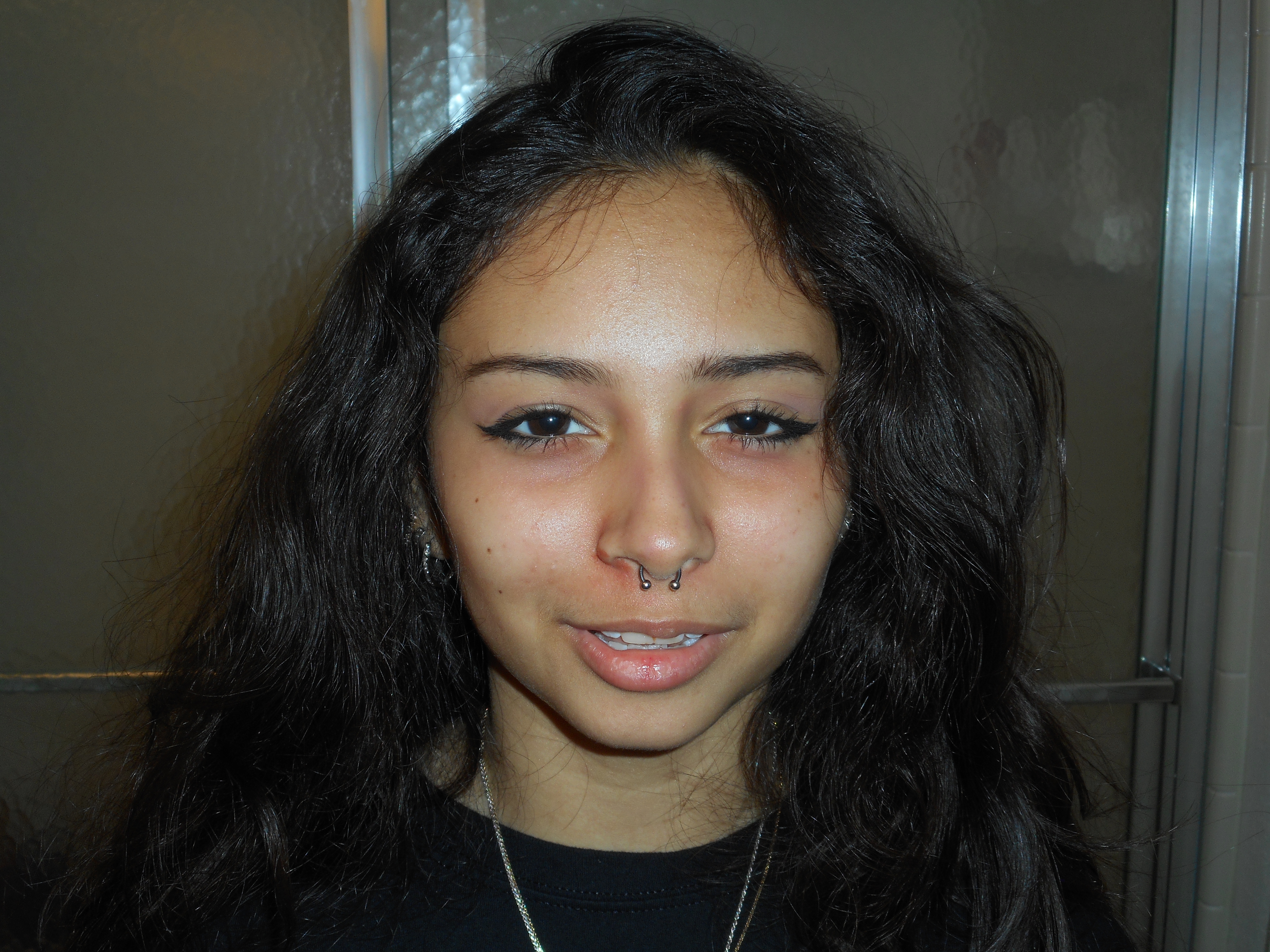
A photo of the completed look of our actress playing the part of Abby, taken from the Nikon Coolpix S3700 camera used for scene 1.

The process of getting our actress ready was taken on the same camera used to create the scene. We decided to use the camera's 'warm light' filter as seen in the top and bottom photos to film the long take. It adds associations of comfort and nostalgia that the saturation level has, which then should contrast with the following scenes intended to imply that Abby has passed away since the start of the video; the absence of life = lifeless color and diminished personal aspect of the filming style.


Scene Changes

Initially, scene 1 was always going to have a panning establishing shot across the room the girls are in to showcase the setting that would later again be shown in scenes 2 and on. But we wanted to create more foreshadowing details that would establish the narrative that Abby passed away and make the editing process for me less difficult to transition between the scenes.

An example take of how Pam appears to struggle with turning on the camera and realizing it is already recording, increasing the natural feel of this 'home video' between friends.

As she is playing with the camera's zoom feature, the all-black clothing on the bed is a focal point before going onto Abby. This was added in to foreshadow the funeral outfit Pam will be wearing in the following scenes. The camera intentionally moves off her face to convey that Pam is caught off guard when her friend turns around, as she looks unwell. Adding elements that will be shown in later scenes will benefit the clarity for when I straight or jump cut takes to resemble 'flashbacks'/different time-periods between scene changes.

Thursday, February 22, 2024

Script Revision

Filling Story Gaps

Before receiving full approval for my film production from my instructor, my film partner and I had to clarify our production decisions to him to better his understanding of the vision we had created and our own. We realized the importance of specific elements in the scenes that needed more emphasis to convey narrative with more clarity. In the scenes that follow the first, the audience is now left to put the pieces together as to why such a sudden change in atmosphere took place. Our intention is to convey that Abby has since passed away from the video and Pam is struggling with intense feelings of grief.

Having some kind of memorial speech be shown in a close up was in our script prior to his concern of this being missed to audiences, but brought us closer to solidifying the plan on that prop close up. If we bolden the title of a paper to "Remembering Abby 2005-2023" or something similar, with written speech underneath and even dried tear stains on the paper, holding on this frame for a couple of seconds will fill in gaps of comprehension the audience may experience. Similarly, a close up on a trash can filled with crumpled up papers resembling the eulogy speech paper will portray agitation from Pam, as she had many failed attempts before reaching a typed final copy. As editor, I plan to straight cut these two shots to have the connection between them become even more apparent. 

An example of how paper can be shown in an extreme close up. In this image however, the text is too small and not bold enough to have a certain line be the central focus as a read. In our shot, the title of the eulogy will be boldened and the camera will be completely in focus, shallow focusing everything else in frame besides it to have it catch the most attention as it is a key signifier early on as to what has happened.

Furthermore, my cinematographer mentioned concern of how we plan to transition the home video scene to a cinematic third perspective. Originally, it was our idea to have the first scene take up half the film opening two-minute duration with a separation from the other scenes by using a pause button effect that cuts to the girl watching it on her laptop. 

A behind the scenes view of my cinematographer testing out how this angle would look like. We asked questions to ourselves such as; does this successfully show that the home video the film started with was what was just watched by her? How can we make this moment of snapping back into reality heavier (showing her emotional reaction to the video versus using this simple over the shoulder shot)?

Transitioning Between Scenes

To complete this effect realistically as beginners and save my audience from having to watch an overarching attempt of it, I plan on using the freeze frame technique I learned from watching Adobe Premiere Rush's starter pack informational videos on editing and having the video's pause not be shown on a laptop as the main focus.

This inspired a redirection for this shot; why should the video be the focus? It can be wrapped up within 30-45 seconds to show our skills in the remaining scenes if it is made clear the video has been stopped using a freeze frame and straight cuts to Pam staring at her laptop center-screen – therefore, the story is told without the awkward transition necessary. We revised the script to have Pam's 'mother' call out to her in specific dialogue that audiences could draw context clues from with, "I know you don't want to go, but it's time." This acts as the muffled voice that pulls her out of the dissociation that took place while watching a video of her (displaced diegetic sound) and Abby that when looked upon closely, it was clear she needed help beyond Pam's capabilities. It also makes the scenes increase in meaning for the focus to shift on Pam's reaction to the video, as we want it to look like she has just finished reminiscing and that something grave has taken place in between the time periods shown to audiences.

Often when someone passes away, especially in this generation so blessed with access to technology, there is an overwhelming amount of photos, videos, and memories stored in the screens to look back on. Altogether the combination of revised, specific to point dialogue and ensuring that not just the shots consist of meaning to them, but that the way they are presented through editing and sound design, all help to mirror the vision we see for the story in our heads and tell it more personally to audiences.

Getting an outside perspective to see our film production plan helped to fill in the gaps in storyline we did not see were there on our own and I am looking forward to implementing these changes on filming days and my post-production journey. They will prevent confusion and act as seamless narrative ties between scenes!

Exploring the Canon Rebel t5i

Using a Second Camera

The scenes after scene one (at around 30 to 45 seconds) will be used solely with a Canon Rebel t5i camera. A close friend of mine is a photographer and uses this camera and has lend my cinematographer and I its use and his knowledge! Now that the thought behind filming with the Nikon Coolpix S3700 was elaborated, the reasoning of switching near the middle of this film opening is to contrast the state in which the main character, Pam, is in. We want audiences to be thrown off-guard when the camera quality becomes so impressive at the end of the home video, symbolizing the new reality Pam lives without her beloved friend with an entirely different film resolution present.


A tripod we bought to help my cinematographer make very still, precise shots during the scenes after the home video.


Pictures we took using the Canon camera to showcase the quality of the camera and the low exposure, dark atmosphere it creates.

The duality of using the camera is that it clearly separates scene 1 from the rest because of its quality and adds to the depressing atmosphere of the film from its ability to manipulate color and exposure levels as seen in the practice images. The Nikon Coolpix was used to develop the idea in audiences that it is a home video, while the Canon camera brings the film to the next level of a cinematic look. The clarity in which the camera captures also adds to the film's representation of grief; as if the world for Pam has completely changed, hence a different camera.

The content on the camera can be easily transferred using an SD card reader and overall was a quick learn for my cinematographer. Zooming in on the camera does not create any noise and creates very smooth videography, in comparison to the Nikon's produced sound of zooming in being heard intentionally in the film itself. The Canon's use in these scenes will remove the personal atmosphere of the girls recording themselves effectively. 

Wednesday, February 21, 2024

Nikon Coolpix S3700 Camera Workshop

Reasoning Behind Chosen Equipment and Learning How to Use It

The Nikon Coolpix S3700 and Canon Rebel t5i are the two devices the film will be shot from. As mentioned previously, the storyline of the film involves the close friendship between two girls; Abby and Pam. This is established in the first scene of the film, as it is supposed to resemble a 'home video' the girls created at Pam's house that will later contrast with a cut to the 'present' – a reality where Abby is no longer alive. This means the cinematography in this first scene would be hand-held and 'unprofessional' to indicate that it is the friend recording. To add to this personal vlog style video we intend to bring to life, I searched through old models of digital video cameras I had and found the jackpot that is the Nikon Coolpix S3700.

The resolution is distinctively different from the average IPhone for its grainy yet soft capturing lens. It instills immediate authenticity for its 'retro aesthetic' that many find nostalgic and a 'personal touch' in film.

The Nikon Coolpix S3700 and a photo we took on it to test the flash and available filter modes on the camera itself.


Due to teenagers being represented in the film and the uprising of early 2000s technology being used by the younger generation, we agreed that using my old camera would build on the narrative that this is a home video for the girls to look back on and was nothing serious at the time.


Thumbnails of the trending comeback of digital camera use among young adults on social media app TikTok.


Screenshot of Mashable article regarding the rise of the digital camera trend on social media, giving statistical data on the millions that are interacting with it online.

With this in mind, I set out to learn how to use the camera alongside my cinematographer. The camera was relatively easy to use and while practicing shots, we questioned the benefit the camera would give us over using our other options. The use of two separate cameras being used in the film not only gives us as filmmakers more to excitingly explore, but would serve meaningfully in their corresponding scenes to help contrast the them as the past versus the present through the difference in saturation levels and resolution. Additionally, the Nikon creates a playful mood being a hand video camera that reflects the girl's friendship, so we ultimately decided to move forward with it. But being the editor, I first wanted to make sure the camera's content could be transferred to another device with the same if not better quality.


An SD card reader I purchased to transfer our practice shots to another device. To use it, I removed the SD card of 8GB from the camera, placed it into the slot of the reader, and connected the attachment to my IPhone. The quality looked even better when imported and this gave us the greenlight that the camera could efficiently be used for me to edit its content later on!


A video of my cinematographer using the 'Toy Camera' effect on the camera that accentuates the blue and green tones in its appearance and testing the zoom feature. 

We do not plan on using this effect in our film because it creates an eerie found footage look, but still wanted to try out every effect so that we could choose the one best suited for our film purposes. Moreover, in the video, when she zoomed in, you can hear the camera lens moving to zoom in closer. This was something that caused us to love the choice of camera even more, especially because the sound design will rely on unsettlingly quiet diegetic sound. During scene one, Pam will question Abby for being under the influence of drugs and Abby will stay silent and continue to be avoidant of the issue while staring at her reflection in the mirror. Pam will zoom in on Abby's reflection while waiting for a response, so the faint creaking noise of this zoom will fill up that silence and increase the tension, disrupting the equilibrium that the home video had at the start successfully!

Thursday, February 15, 2024

Sound Design Training

Telling a Story Through Audio

While working on our production portfolio, my film partner and I worked on the AV script template together so that our ideas for the film would be brainstormed together. As we were writing, she had the idea of muffling the sound of the first scene to transition to the next scene's audio to give a sense of dissociation emitted from the character. I loved this idea and researched how I could manipulate sound this way on Adobe Premiere Rush to prepare myself for the editing I will do in post-production.

A video I watched to learn the broadness of sound design in filmmaking and how its techniques can be done using Adobe Premiere Rush, the editing software I will be using.

I found it interesting that the application itself has sound effects copyright free for my choosing. This may be needed later on in post-production. In B-roll's scene 2, we envisioned a shot of the girl's heels clacking on the floor as she walks out of the room. To have this sound be emphasized and all that is heard in a quiet room, I could add in effects as they did in the video so that the sound quality is more 'professionally sound.' Adding in sound effects can act as transitions on their own when done correctly – as seen in timestamp 2:51 from the video. The water droplet sound effect pulls in the droplet falling into the other one, even though they are entirely different. The sound makes them coincide with one another.


A stock video from Adobe Premiere Rush that I edited to muffle the sound at the beginning and become clear when she finishes her sentence. 

Going back to the idea my film partner had, I changed the intensity of the background noise and induced echos here and then split the clip to change the audio settings for the end of it (take off the applied effect) to have the audio return to its original clarity, This is what I would do similarly in post-production, except the audio would be muffled more intensely – fading in and out as though the girl is thinking of the memory in a dream and is being pulled out of it by another voice not seen in the scene.

Sticking to a Storyline

Narrative Impressions

Our film will showcase a friendship between two girls that is lost to drug addiction, costing one of the friends her life. It represents grief and the issue of addiction in two main parts. This was decided early-on as the message of our film. But now having our location and actors decisions set, we are now moving out of pre-production and into production days! 

We thought over how the entire film will be shot in the same bedroom but is intended to look entirely different in each scene to insinuate that a lot of time has passed between them. Through an editing perspective, this could be a hit or miss to the audience. They may not pick this up, causing confusion of the narrative storyline and message intended to be told. It could make the takes look inconsistent rather than develop the story.

Besides freezing the frame through editing to convey a 'pause' in between scenes to distinctly separate events, mis en scene techniques could accomplish the story we are trying to tell. The room itself could be colorful with lots of decorations and personality to it, while in the second scene, looks empty and lifeless without much decor or personal touches. Adding and removing props between the scenes that are meaningful to the mood they add to the room will be essential to conveying that the girl has changed significantly since her friend's death. The colorization of the actual film as well has a dramatic impact on the tone it has.

A warm color preset available on Adobe Premiere Rush applied to their stock videos for me to practice using editing features. This makes the weather in the photo appear pleasant and for the islands to look welcoming because of this balanced and saturated, warm-tone look.

The Azure color preset on Adobe Premiere Rush using the same image to contrast the vibe each change in color creates for the photo. The waters and islands look isolated and gloomy, scary even, because of the strong deep blues and darkness surrounding the photo.

Analyzing the same scenery but with various pre-sets on it made me realize that the scenes of the same room with different implied time periods and mental state of the girl could be conveyed by utilizing one of these colorization templates. Blue and some dark colors have association with sadness, while warm-tones remind people of comfort and coziness, which is why using this kind of dramatic color contrast between scenes could additionally be used to reflect the mental state of the girl; how it changed after her friend passed away. Resolving these physicalities and using all tools available on these softwares if helpful, will make my editing process smoother and for there to be a clear visual of what is needed from production days for me to edit the vision to life!

Learning Editing Software

Adobe Premiere Rush

The editing software I will be using for majority of the film's editing and sound components is Adobe Premiere Rush. In a previous film I worked on, I familiarized myself with its software as far as filming directly on it goes and reordering clips to better implement my ideas as director. But now working as this film's editor and sound designer, I wanted to understand the software's capabilities more in-depth.

After downloading the application onto my MacBook computer, Adobe had its editing workshop for beginners; The Getting Started Series on Adobe Premiere Rush CC. I watched all the videos included in the series, teaching me the shortcuts to editing faster, smoother, and smarter.

A screenshot from the video tutorial showing the advanced sound features available on Adobe Premiere Rush.

Considering that the film will be shot at home and will likely have background noise of pets and other people, the "balance sound" and "reduce background noise" feature will definitely be used to isolate the audio in parts. The film is going to convey dramatic tension involving addiction issues, which my film partner agreed that the sound dynamic would be unsettlingly quiet, therefore these features would help grow the sound quality to reach this impression. I would have to check the buttons I want and then drag a slider to choose the intensity of the sound edit, whether it be to enhance the speech of dialogue to sound more crisp or minimize echos in clips – I have the capability of manipulating the sound to better suit the narrative being told in the scenes. 

A screenshot showing how when starting a project, adding clips is numbered and can be easily rearranged and viewed in the project tab for revision.

This is good to know going into filming days so that I can number takes in the order they were taken to choose the final takes easier when comparing them side by side. Although very basic, understanding the platform I will be working on for the weeks ahead will help me get ahead in my editing skills and organize scenes. There is also a way to collaborate on the same edits on multiple devices and see the changes you make reflect all devices it is connected to, so when choosing final takes, I can have my cinematographer review them with me and overall be closer to my part of the process so we can share ideas to improve aspects as we go along.


Predicting Edits

Knowing how the film's storyline is headed, especially with such a long-take for the first scene, I want the transition between the first and second scene to be dramatic. I talked with my film partner on creating almost a 'pause' effect that appears on the screen to create a trippy feeling for audiences to witness; past to present time jump. The idea is that the camera would cut to the other friend 'watching' the video of her and her friend, indicating that it was from the past and is nostalgic to her. This would require a 'pause effect' to take place, which required me to do more research on to find out if I could mimic the effect we had in mind. 

A concise video I watched demonstrating how you can insert a frame hold segment to symbolize the pausing of a video.

This video showed the ease it is to induce this 'freeze effect.' It allowed me to assure my cinematographer that we could transition between the two scenes using this kind of editing. Making sure I know what I am able to do for the film before incorporating the vision into our storyline will help us make a realistic planning to shoot to reality for us to follow!

Friday, February 9, 2024

Working Out the Details

Location Considerations Early-On

As editor and sound designer, it is important for the location where filming will take place and for actors involved to be reliable. In my last film, the weather outside prevented our shots from looking coherent with one another. It was also around other people filming so often times, we would have background noise of other groups. Aside that, when deciding on filming dates and location, especially if it is outside, in-depth planning before filming is essential to the success of the film.

We pondered on our original idea to film the characters at the beach. Filming outside creates uncontrollable variables such as weather changes and large groups in public interfering with filming. Going back to the main issue we want represented, it led us to an entirely different location that happens to reduce those variables; the girl's bedroom on the day of the 'funeral.' This would help to strengthen the narrative to tie back the memory the girl gets of her friend to one they spent in her own room. Friends often go to one another's houses, so immediately it can be assumed that they were very close. The audience will also get a personal feel with the characters.


Keeping it PG

As our film is about drug addiction, we wanted to make it clear to the audience that one of the girls is suffering from addiction without actually using drugs or props that give the impression  of them in the film. So, we have to rely on specific mis en scene techniques and narrative implications to convey this. 

Still from Euphoria, 2019 of main character, Rue high on drugs. The red, purple eyeshadow makeup under her eyes and nostrils makes her look tired and under the influence of drugs. Her hair is also ruffled to make her look unkept, as though she has been lacking in taking care of herself.


Still from Moonlight, 2016 of the mother in the film erratically looking into the camera, dark circles accentuated to reflect her exhaustion and desperation for drugs.

Cinematography wise, these films in these shots use shallow focus as their depth of field to emphasize the state of mind of the characters from their appearance. But most of all the makeup and facial expressions of the actors is what correlates to the audience that they are under the influence of drugs or alcohol from this rigid 'look' and behavior. Therefore, in our own film, we plan on implementing makeup on our actor assigned to the role of playing someone with an addiction issue.

Incorporated Sound

When watching the openings of films on drug addiction, they seemingly have one thing in common; uncomfortable silence at times with random outbursts from the character that is addicted to drugs. This is something my film partner and I agreed would be the sound style of our film, so we made it clear early on to our actors, as they would have to portray themselves as jittery and 'on a thread.' The makeup and hair effects being 'rugged' help this portrayal but the sound and body language of the actors tell the rest of the story. I plan on doing deeper sound research to learn how I can isolate and muffle areas to drown out sound, giving the feel of dissociation as almost an insight to the mind of the person suffering addiction and the other girl's grief battle. The details tell the story!

Thursday, February 8, 2024

Titling and Prepping for Production

Choosing a Title

As my film partner and I near the beginning of production, we first have to create a pitch for approval. To do this, we discussed the possible names the film could have. Grief and addiction often go hand-in-hand, with those who are addicted feeling utterly attached to the drug, while those around them to feel as though their loved one has already passed away from how much the drugs have changed them. They become shells of their previous selves. Addiction commonly leads to overdoses as well, making grief the emotion that follows after people who care for the addicts. These two issues create significant negative impacts on mental health and will both be subtly represented in our film.

Due to the strong correspondence between the two, titling our film, 'Intertwined' meaning "difficult to separate" and "closely connected" felt perfect for the film's context. Having a title we could put meaning to helped to move along the process of developing a storyline for our film.


Expanding Editing Knowledge

In the process of creating a storyline, we had the idea of making the first half of the film transition smoothly to a girl 'watching' what was just shown full screen, to being on her laptop, at an entirely different location. Thinking ahead in terms of how this transition will be edited, I researched editing techniques.


A video I watched to learn editing techniques ahead of production.


Walter Murch's Rule of Six chart (as shown in the video linked above) divides each aspect of film that should be shown through editing with emotion, rhythm, and story as the main components. 

Some editing suggestions he has are:
  • Mournful, contemplative scenes should hold on scenes longer to communicate those emotions while frantic, chaotic action packed scenes should use rapid cutting to reflect that. I want the film's two main scenes to contrast heavily with one another, the first being playful and chaotic and the second being solemn and quiet. Keeping Water Murch's theory in mind, I would need various shots for A-roll (the first scene) and long takes for B-roll (the second scene).
  • Cutaways, involves a cut from the place of action to another place — create and break tension or can indicate what is on the character's mind. This edit will likely be used to transition the first scene to the second, conveying that the first half was in the past of the girl's mind. 
A few other key terms learned from the video are:
  • Eyeline match — cutting from the eyes of a character to what they are seeing to correlate their perspective to the audience.
  • Cross-cutting — editing two or more scenes happening in different locations simultaneously back and forth to give a multi-layered action effect.
  •  Eye trace — cutting between multiple shots that focus on the same area of the frame. This increases audience focus to a particular character or object from shot to shot.

Educating myself on different editing styles and techniques as explained in the video, will help me give make informed collaborative decisions with my cinematographer, such as how many takes or shots in the same location are needed during production to aid me in the editing process later on. 

Tuesday, February 6, 2024

Representation in Film

Deciding on a Representation Issue

From the bat, my film partner and I wanted to convey mental illness as the representation issue being portrayed in our film. But we wanted it to be more specific to the issues teens of the modern day struggle with. Recently, there has been an uprising of drug overdoses in minors in the United States. The issue is overwhelming and continues to effect the new generation, some deaths even involving children as young as being in elementary school. When researching this issue, we decided to make our film's message with it in mind; grief and addiction in adolescence.

To begin developing the structure of our film with this message, we broke up the film into two main scenes (A-roll and B-roll). The first half could introduce the character that will be 'addicted to drugs' while the second half could exhibit the 'aftermath' of her addiction, which would later develop (if the film was longer) the emotional turmoil experienced with grief.  This past to present narrative style jump was inspired by analyzing Euphoria, 2019 in my previous blog post and chosen for the dramatic effect it would create on the audience by seeing someone 'before' they hit rock bottom addiction.

Researching Chosen Representation Issue Further

With this organization in mind, I wanted to ensure that we both had an understanding of how addiction issues are represented in existing popular films.

Opening scene of Beautiful Boy, 2018.

Beautiful Boy depicts the perspective of a father seeing his son lose himself to drug addiction. In the first two minutes of the opening, there is a very long take of the father discussing the point he is at with his son; desperate for help. The take explains the situation, establishing a strong narrative. The scene also shows the love this father has for his son, enough to reach out to understand what the drugs are doing to his son and how he can help him. 

The sound of this long take is quiet, focused entirely on the dialogue exchanged between the father and the person he is seeking help from. The camera does not move from this one-shot of the father. Even though there is another person speaking, the camera position stays locked on him, conveying that the matter has entirely to do with him. The sound does not change either, and the two aspects of the film here reflect the serious nature of the conversation, the uncomfortable harshness of it.

Then, a 'one year earlier' text appears against a black screen at almost a minute and thirty seconds, transitioning to the past (temporal editing) to catch the audience up to what led the father to reach that point of exhaustion. Editing text onto screen such as this to clarify the period of time in which the events are taking place in, help to maintain the audience's understanding of complex storylines involving heavy messages. An establishing shot of the son's room is shown in dark lighting, creating a mood of emptiness as the father opens the door to see if his son is home. The father being alone in the house is shown with straight cuts from what he sees in the empty house, to emotional expressions in close up reactions, as well as the restlessness in his body language in wide shots.

What stood out the most was the significance that the pace of editing had on the shots storytelling; the father is waiting and waiting for his son to return home. Slow editing creates tense and in-depth storytelling for this kind of context. As far as both editing and sound design goes, this opening has inspired me to incorporate very unsettling silence and one-shot long takes that correspond to the nature of the film as Beautiful Boy utilizes in my own film. Having long takes that give the impression that it is going on for too long, waiting for a trim, relate back to the unsettling and mournful mood the film intends to create. Using one-shots and slower paced editing between them will increase the personal level audiences will feel with the character on screen and help to isolate the emotions of the teenager suffering with addiction, as well as the effect this has on her loved ones.


Sunday, February 4, 2024

Take Aways

Impact of Analyzations

Breaking down The Breakfast Club, 1985 movie opening, inspired me to incorporate the foreshadowing the film exhibited into my own ideas. If we can't show the entirety of a beginning, middle, and end storyline, showing the 'aftermath' of the film could make it more intriguing to audiences, leaving them to piece together what could have happened or what message was intended in under two minutes as they did. However, the opposite of this approach is shown in Euphoria, 2019 pilot episode successfully.


Opening scene of Euphoria, 2019, season 1 episode 1.

The beginning of this show, in its first 2 minutes, unravels the main character's life and struggles. Visuals are shown of her being in her mother's womb to her as a child, which jump to her as a kid and then as a teenager. This allows the audience to feel personally connected and invested with her character, as they have just witnessed her 'growing up.' She narrates this opening by talking over clips that correspond to certain struggles she endured throughout her life, leading to an understanding of the life she lived, relationships to others, as well as her mental state. 

The cinematography appears use quite a few one shots of her centered to frame, conveying a feeling of unsettling isolation surrounding her character. The camera positions begin distant and zoom into characters as they are talking to separate each identity of the characters being introduced thus far. The editing is fast paced, with straight cuts used back and forth to transition from one state of age to another and a dark hue over the scenes to resemble nostalgia as she talks of her past. This is called temporal editing, when editing allows for the perceived time in the film to be manipulated. Altogether, these techniques aid in telling a story — a fast overview of her life before the show's beginning. This sets up the storyline for the rest of the show and is a great way to maintain an audience's interest.

Considering Both Approaches

The reasoning for analyzing The Breakfast Club and Euphoria is for the fact that they are both coming of age media that contrast heavily for not just the time period in which they were filmed to reflect teenagers (80s versus modern day) but with how they began. The Breakfast Club opening with its resolution of the entire plot and then going back to how it all began, peaks interest in the audience and leaves expectations of the film solidified (the ending was revealed). Euphoria however started with an exposition, focusing on the main character's upbringing (birth to present) which leaves expectations for what will follow unknown.

It is interesting to see such different ways of beginning a film that represent similar core representation ideas; addiction, bullying, depression, and loneliness that is the teenage experience for many. Although, for their individual storylines it is apparent that it could not have started off any better. Several take away notes have been made ranging from each opening's foreshadowing of events and manipulation of time, to utilizing color hue editing to convey a mood into my planning for my own film. Overall, kicking off strong and dramatic with good narrative storytelling through a unity of work from editing, cinematography, and sound design, is what makes a good introduction impressionable for a coming-of-age/drama film!

Saturday, February 3, 2024

Preliminary Research

Being Aware of Film Intentions

Keeping in mind that this film is supposed to be the first two minutes of a whole one, there should not be a distinct beginning, middle, and end in it, but still however showcase some kind of representation issue. My partner on this film and I discussed possible genres we could use with representation issues we wanted to explore, the most being a drama/coming-of-age film. Prior to this film, I created a comedy. I found it unfulfilling to convey a message of representation when given humorous circumstances. This time around, doing a drama, something more serious in nature fits right onto the kind of meaning I want my films to develop in the audiences it reaches.

The first idea we decided on was that the group in which we would be filming would be teens. This is because of our limited abilities to find actors that would be as flexible or invested in the film. We also felt that representing an issue teens go through would be reflected better considering that we are teenagers ourselves.


Analyzing Film Openings

As part of my preliminary research, watching the openings of films that resonate with the dramatic flair we had in mind helped us get a sense of the structure our film could mimic.

Opening scene from The Breakfast Club, 1985.

The first two minutes of The Breakfast Club, 1985, (post-credits) seemingly shows the aftermath of what the movie will entail. There is a quote by David Bowie describing the new generations as rebellious, but self-aware. This quote 'shatters' with an editing effect that makes the quote appearing to be glass breaking, with added shattering noises. This dramatic transition to clips of a school, "Shermer High School" and the message of the quote create a foreshadowing to what the movie is about, where it is taking place, and who its representing; teenage students of the new generation.

The cinematography of the opening is primarily establishing shots of the scenery around and inside the school, with several close ups of meaningful details. There is vandalization on its property by students, some being carvings in walls hence "I don't like MONDAYS" and the broken locker with its contents spilled out on the floor. The editing is also synced to parts of the beats in the music, which increases the flow of the opening scene aesthetically.

As for sound, there is a song playing in the background with strong guitar riffs and a voiceover of one of the characters reading a letter that is from the characters in the movie. Rock music has is often stereotyped and associated with being 'rebellious', furthering the assumption the audience can make of the main characters. The letter being read aloud also gives context of the movie and its end before anything else; the students are at Saturday detention and were instructed to write a letter to the teacher on who they think they are. What is being read out loud is the finished product. 

The letter's tone is confrontational, leading the audience to anticipate what it took for the students to reach such a strong conclusion of themselves. The boy who reads the letter describes himself and the other characters before the audience even meets them as brains, an athlete, a basket case, a princess, and a criminal. This establishes well-rounded labels for the character types and dynamics in the film, creating a deeper understanding of the film's representation. Altogether, these techniques will be noted for usage in my own film to better my editing and sound design responsibilities to tell a story just as equally as the dialogue or plot will on its own.

A New Beginning

Rebranding Lantern Shark Productions

With my first film completed, I have a better idea of how to go into my next one, as well as more knowledge on the broadness in which I can explore and implement media techniques and devices. My role as director on my previous film taught me the importance of maintaining a consistent vision throughout every stage of production to create a good film; to ensure the storyline components, sound design, and cinematography coincide with one another. Learning the basics of roles that were outside my own to better understand the process in making a good film, has excitingly raised the expectations I have for my own work and others I work with.

When researching the skill roles of my group and doing a Creative Critical Reflection, editing caught my eye the most. So, Lantern Shark Productions will be taking on a new challenge as the editor and sound designer of my next film, with emphasis on the editing journey process. My aim in editing this film is to utilize the power of turning cinematography into a higher art form. As someone with high media consumption, I want to understand the tools available to me on devices I use so often. How can I contribute to creating something that sparks interest and discussion in its audience? And how can this be done through editing and sound design? The possibilities are endless!

Photos I recently edited to exercise relighting techniques to suit a photo's mood better. I am looking forward to implement my love for editing and photography to working with videography! 

Thursday, December 28, 2023

Critical Reflection Response

How does your product engage with audiences and how would it be distributed as a real media text?

My product engages most with audiences through its narrative and associations with the comedy genre. The film has a strong, exaggerated storyline portrayed through the actors' facial expressions, as well as the mis en scene, sound, and editing decisions implemented in it. The switch from a calm, competitive game to an aggressive, comical chess war creates a comedic effect for audiences to enjoy. This plot twist is supported by straight cuts from one shot to another, displaying the contrast of each chess player’s personality and skill level throughout the film, whether it be a close-up of one player’s face reacting to the other or of their chess move in slow motion to intensify the game even more.

The film begins with light music but then switches to intense rock when the girl starts to ‘transform’ into an amazing chess player with a dramatic flair for competitiveness. These choices each have thought-out reasoning as to why they were used specifically, which in turn, allows for all components that make up the film to create expectations, laughter, and overall comprehension for the audience of what is taking place in the film.

As a real text, this film could be played at a comedy film festival, such as the Austin Comedy Film Festival, that screens independent short film comedies to reach wider audiences. A student-based beginner film like ours is a perfect candidate for this small, but respectful film screening event for its resemblance to standard comedy genre expectations and impressions.


How did your production skills develop throughout this project?

By planning to shoot and shooting to plan — a saying my filming teacher advised us to follow, my production skills developed throughout this project. In being responsible for pulling the vision we had for the film together, I learned that thinking ahead in terms of production and voicing concerns I had as they came was essential to the success of the film.

On the first production day, I felt prepared for filming, but there were gaps in communication between me and my film crew because all of us showed up that day with unique ideas for how shooting would begin. This delayed our progress in shooting scenes that would produce a deeper narrative but, was unnoticeable in the final product because as we filmed, I considered how during the editing process, there may be something missing and I wanted to avoid this possible revelation. 

So, I had my editor and sound designer begin to work on what we shot each day, whether it be trimming down clips or saving audio that could later be used. This was almost an ‘assignment’ for them to do and get back to me — without this process, we would not have realized exactly how much our film was over the duration maximum of one minute by five minutes! Going forward, I was forced to revise the original storyline in a way that conveyed the same message intended, but more concisely. I also shared a collaborative agenda document for my group to view and discuss together before shooting times, which increased the cooperation and creative dynamic I had with my group from a director standpoint.


How did you integrate technologies  software, hardware, and online  in this project?

Starting with the physical aspect of technology used to produce this film, an iPhone 14 was the camera we used, in addition to putting it on a tripod to create stabilized shots that gave more of a cinematic impression. I learned that when you get the tripod and the camera mounted in a very specific way multiple scenes will be shot, it can be beneficial to record those scenes ahead of time in the same spot to maintain consistency throughout the film. The tripod gave an edge when it came to producing aerial shots of the chess board in key scenes, such as the ‘tug of war’ the players had with the chess pieces indicating the final winner; the girl. We were able to position the tripod on a table with its front legs shortened and the back extended to not have it appear in the shot itself.

On the iPhone, we filmed from the Adobe Premiere Rush software for its extended settings in focus capabilities and editing features within the same platform. The iPhone model itself is quite new, which is why it was chosen as the camera for the film, as it was the best available to us. To aid my editor and sound designer in their technique decisions, I watched tutorials online via YouTube and within the Adobe Premiere Rush software itself to understand its potential and add suggestions. 

Moreover, the Apple Airdrop Bluetooth feature and YouTube Studio helped distribute the film between us and to an audience for its ability to sustain frame quality. 


Wednesday, December 27, 2023

Creative Critical Reflection Video

How does your product use or challenge conventions and how does it represent social groups or issues? 

My creative response to the question titled.
Switch the video to 4k for the best viewing experience!


Sunday, December 3, 2023

Screening the Rough Cut

Feedback From Peers

Having reached the deadline for the rough cut, our film was able to be played to its first audience; my peers and instructor! My immediate reaction to watching the film I directed was that it still needed a lot of work, but I am proud of how far I have come and know that I will take all I have learned into my next film.


A picture of our film, "Opponents" being played to our film class.


The reaction to the film was pleasant overall. My peers made comments on how the film had an interesting narrative and that it had a funny ending. A criticism we received from a fellow peer was that the clothing change of one of the opponents (the girl I played) repeatedly changed. This was not surprising to hear because this outfit change was intentionally done to convey a sense that the girl entered 'game on mode.' In the beginning, a bright pink shirt is worn to draw attention to her character. She then is seen wearing a black and white outfit after her 'makeover' with face paint and a bandana that is purposed to present her as tough and determined to win the game. But because the film had to be only a minute, we cut the scenes out that would clarify this change to the audience.

My film crew and I decided to keep this scene in despite this confusion from a peer because our comedy is not meant to be realistic, hence the random face paint and bandana being put on the girl's face by unknown characters and the ending of the girl skipping away with an extra. Comedies tend to stress the absence of logic in their films to make it funnier. However, going forward as a beginner filmmaker, I will be more cautious of how the attire of characters can confuse audiences about whether events happened on the same day or not.


Feedback From Instructor

The criticism my instructor had for the film was first on the song choice for the first half of the film. He described it as an 'Irish jig' that did not seem fitting for the scenes it played in. Having heard it labeled that way, I realized the song choice felt very out of place for what was happening in the film. The sound for the film was non-diegetic, but this song felt random and not in a beneficial comedic way. Another critique was the title of the film. He suggested we use a thicker font that created more contrast with its background. 


The original opening played for the film's first audience consisting of a song with inconsistent sound distributed throughout clips. The peaks in intense violin did not match well with what was happening in the film up to this point; the characters just began playing and tension this high reflected in the music should not be there yet.


An updated version of the film's opening that took note of the pieces of feedback we received.


I had a conversation with my group on whether the color of the title, "Opponents" should remain white. Red has an association with battles, which is why I voiced it, but my editor brought up a good point about the red-brown color of the chessboard beneath it in that scene being too similar. They decided to keep only the first letter capitalized and the title generally simple with an added black border around the letters as it is only shown for a quick moment.

In place of the previous song, my sound designer and I agreed on a flute piece that comes off as light-hearted and playful, better suited to the meeting of the characters and their gameplay as seen in the beginning. Bird chirping was added to make the outside setting more significant and peaceful. These new audios also synced up with certain parts of the film, such as when the girl placed down the first chess piece in this clip, which increased the symphony of the clips. This gives the impression that the opponents are playing relaxed, helping to create that shock factor for when the girl switches to utter determination to win. Thinking of the way an audience who has no context to the film perceives it is the approach to take not just when you are trying to deny expectations but to help make it comprehensible and enjoyable for others.


Friday, December 1, 2023

Multitasking & Impact of Music Choices

Defying Potential Setbacks 

My editor had to revise the rough cut many times to get it down to something we all approved of. We all agreed on wanting to screen our rough cut with sound to have the most feedback we can get. So, as our deadline for this draft approached, my sound designer expressed not having the ability to work as much as she would have liked to at this point because of the delay in sending her the rough cut. She was also absent on a day my editor distributed the film to my cinematographer and me for review via AirDrop, which we found to be the easiest and clearest way to send one another versions of the film. But, I still wanted her to have the most recent version my editor made so I suggested he send it to her in our group chat that way she could work on it and add in sound before the rough cut deadline, even if it was not entirely done. This way of sending it over was not the best quality, however, by doing so, a rough 'rough' cut was created in time and aided both of them to be proactive in their roles as editor and sound designer. 


Photo of the rough-"rough" cut created by my sound designer with edits and sound added ready for screening.


My sound designer before receiving the rough cut was doing independent research for the platforms she could use freely for audio download, which sped up the process of her sound design as she had the music options ready and had practiced using the Adobe Premiere Rush software. Multitasking the way my film crew and I have since the start of production has truly made such a difference in how we all work together. There is never a 'waiting period' for one to finish their role to get another to start — it is a union of multiple facets of production coming together in any way we can to improve it.


Choosing Between Music

Our film was intended to have two halves; one half being where the chess expert is on a winning streak and the other as the bad chess player makes a comeback, taking the win in a very sudden, humorous way. The sound design idea from the beginning was to use tense classical music for the first half versus hard rock for the remaining portion of the film. But as we looked over edits, because we had so many scenes cut out, the 'halves' became unequal, and sharp changes in sound would sound confusing to the audience without enough time for them to play fully.

My sound designer and I knew that two genres of music were going to be present but that it needed to play smoothly in the comeback scene to distinguish it from the rest of the film. We bounced off ideas of certain pieces of classical music; whether it should be an intense orchestra or a more lighthearted, humorous piece. She preferred the lighter piece because it created more contrast to the rock and roll music that would follow and believed she could smoothly transition the two. From there, we discussed potential 80s and 90s rock bands whose music could do well for the comeback scene; Guns and Roses, Aerosmith, and Deaf Leopard, but in the end rock music from a League of Legends game took the win.

Having conversations about what music could potentially work was important because once it was added in and compared side by side, it was clear how much a song choice changes the tone of the film. Reverting to lighthearted music at the beginning may deny expectations for the audience, first perceiving the film as just two, collected chess players having a peaceful game, and then transitioning to an intense, ridiculous duel of chess.


A table of some music genres and the effects they may produce, as well as emotions and objects they are associated with.

Using classical music as described in the chart is known for its precision and quality, as is the game of chess, which is what drew us to using it at first. Rock music on the other hand is connected to self-confidence, which made sense to use to depict the girl's sudden win against her opponent. What changes things though is the fact that our film is a comedy, so using music ironically (genres that do not necessarily match what is happening in the film) can actually heighten the humor of the film. As director, I learned that changes from our plan for the film regarding its cinematography, editing, and sound do not always take away the original ideas but rather enhance them with what we learn along the way.

Exploring Sound in Film

Sound Design Research

While emerging in the editing process, I realized that a lot of our decisions to keep, delete, or shorten takes would impact the sound choices. The film up to this point was hard to follow at first glance so before we "finalized" a draft, I decided to learn the basics and achievements within sound design to hopefully come up with ways my editor could bridge this gap. Learning the power of sound in films expanded my ability to add suggestions that could later aid my sound designer when the time came to add music and sound effects as well.

Part of my sound design research was looking into the movies awarded handsomely for their sound design. One of these movies was Gravity, 2013, in which the setting is represented as space.


Movie poster of Gravity, 2013 showing the setting in which the movie is meant to represent. It is important to note that this movie is a sci-fi thriller drama, so the sounds are meant to be dramatic and eerie in relation to this setting — unlike my group's comedy, which relies on ironic, non-diegetic sound to create humor. Sound can change the audience's reaction!


A video I watched discussing the specific methods used to obtain the sound in the movie, revealed how dependent they were on vibrational audios (transducer recording) rather than airborne regular audio.

This is unique to the movie for the reason that it is supposed to mimic "space sounds" but nonetheless taught me the extent to which sound can be manipulated and should be used to reflect the atmosphere in some cases to powerfully convey the setting.


A sound design crash course video was provided by my instructor, which I watched to give me insight into what my sound designer will be doing. My editor and I could make more informed editing decisions with this in mind.


The most important takeaway of this research and new terminology learned for my role as director was that sound has the full capability to not just tell a story, but improve the edits. This lifted my hopes for how our film could change once sound was added. Some other terms I learned from the video are ambiance, reverb audio, various sound platforms my sound designer could use for free, such as Soundly, and what tools specifically can be found within Adobe Premiere Rush to heighten dramatic sounds.


Editing and Its Relation to Sound

When doing genre research for my film, I noticed a pattern of using sped-up or slowed-down takes with music changes to create comedic effects. This was something my group was really excited to incorporate into the film involving the chess board and our characters. 


A clip from Blended, 2014, utilizes slowed editing to produce humor, along with dramatic music changes from one character reaction shot to another.


As the girl walks up, reactions from other characters looking at her are also slowed down with the music shifted to fit the expression or impression each had of her. My editor used Adobe Premiere Rush as his main editing software for the rough cut, which has a tool to slow and speed up clips. Since fitting the film into a minute was still a struggle, we decided this comedy genre editing technique could be beneficial in more ways than one. We sped up certain long takes and slowed gameplay moves for dramatization — not by a lot, but enough for it to still remain a short take. 


A clip that was slowed down to induce the dramatization of gameplay between the opponents, specifically when the girl starts to win the game.

The slow motion also helped draw attention to how aggressive the move was, with the entire board shaking and pieces falling. It is intentionally unrealistic to how one would play the game in real life and contrasts with chess being popularly known as a quiet, calming game for comedic effects. The sound pairs with the slow-motion clip by playing rock music to symbolize the association it has with winning or doing something 'cool' in movies. Additionally, a whooshing sound can be heard when the player picks up the chess piece with an added layer of a slowed 'boom' noise that is heard when the white chess piece knocks over the other.


A clip that we sped up for certain parts (velocity edit) paired with a sudden shift to lighthearted classical music towards the end to add to the randomness of our film's ending. The quickened skipping away from the girls after she takes the win served for comedy purposes and shortens this long take to better fit the one-minute duration requirement. All edits involving slowing or speeding up a clip were done with sound design in mind!


Final Cut

The final cut of our film Intertwined! Change quality to 2160p 4k for best viewing purposes. Acknowledged music source: Lvl by Asap Rocky.